













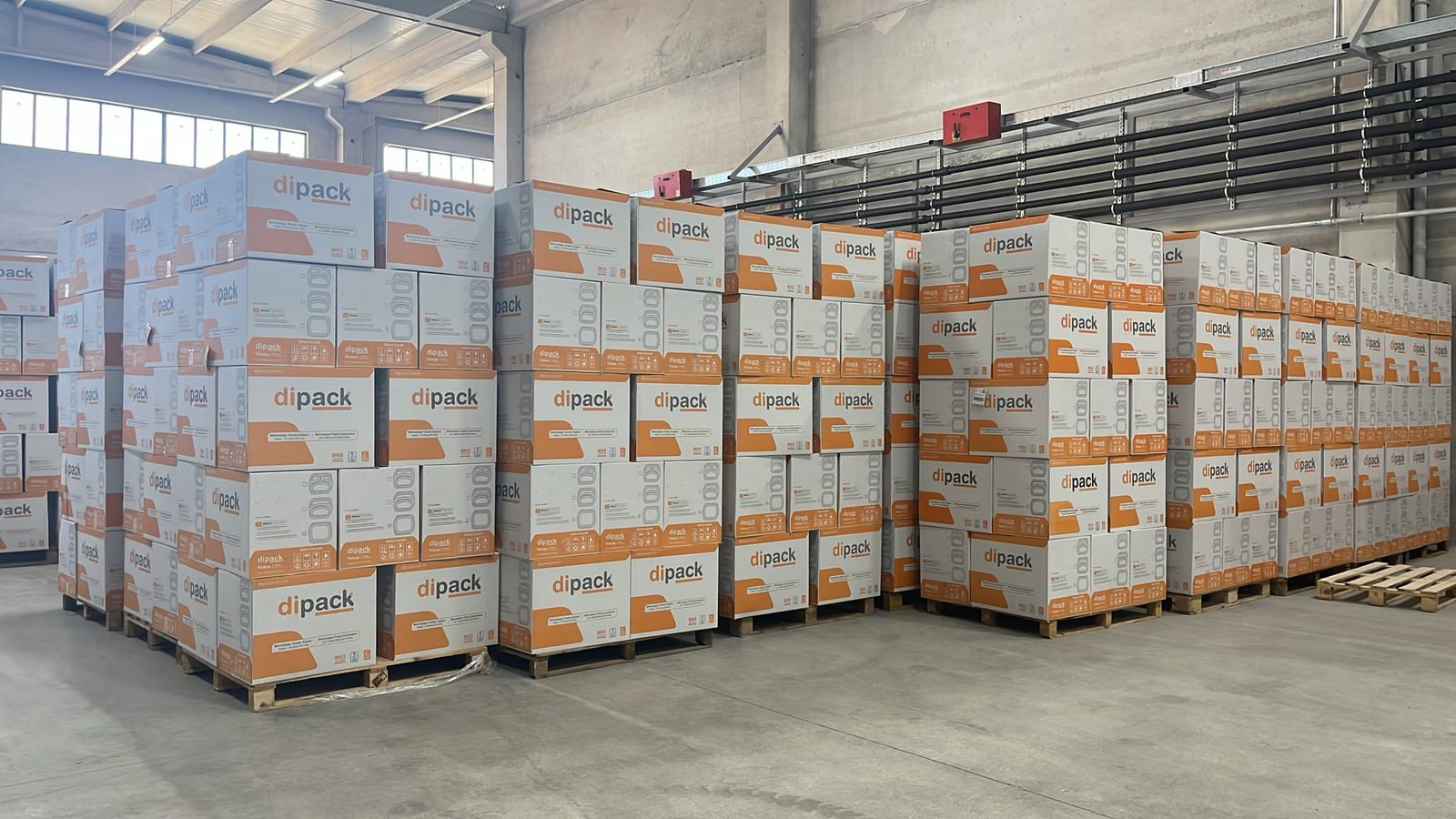
Short answer: when you choose a food packaging supplier, first check whether it is a manufacturer or a trading company. Then check the facility certificate, a declaration of compliance for each product code, the sampling process and how openly it shares carton data. Finally, test its stock continuity and how fast its technical support responds.
These checks make the biggest difference in wholesale buying.
We wrote this guide for restaurants, bakeries, caterers, retailers and food producers. First, we give you a nine-point supplier checklist. Then we explain how to verify each point at the quote and sample stage.
How do you choose a food packaging supplier?
The right supplier gives written, consistent answers to all nine questions below. A verbal promise is not enough, because packaging problems often show up in the third or fourth batch, not the first.
| Check | What to ask the supplier | Reassuring answer | Warning sign |
|---|---|---|---|
| Manufacturer or trader | Which facility makes this product? | Factory address and production method | "We work with different factories" |
| Facility certificate | Do you hold a packaging safety certificate? | Valid BRCGS or equivalent certificate | Expired certificate or unclear scope |
| Declaration of compliance | Will you issue a declaration for this product code? | Product-specific, dated, written declaration | One generic declaration or a verbal promise |
| Samples | Can I get samples to test with my own product? | Samples for the chosen volume and lid | Catalog images only |
| Technical data | Will you give volume, dimensions and material in writing? | Clear table on the product page or in the quote | Vague terms like "standard size" |
| Carton and container | What are the units per carton, carton size and container load? | Numeric data for every product | Quantities you learn only after ordering |
| Molds and design | Who makes the molds, and can you change a size? | In-house mold workshop | No information on molds |
| Stock continuity | How fast can you deliver the same product on repeat orders? | A firm lead time and a dealer or warehouse network | A different lead time on every order |
| Technical support | Who solves a problem found in a batch? | Direct response from production and quality staff | Only a sales representative |
So use this table as a form at the quote stage. That way you compare different suppliers against the same criteria.
Manufacturer vs. trading company: why does it matter?
A manufacturer fixes a problem at the mold and on the line, while a trading company often just swaps the product. You will not see this difference on the first order. However, it decides how fast a problem gets solved.
| Topic | Manufacturer | Trading company |
|---|---|---|
| Quality problem | Fixes it in the mold and machine settings | Passes it to the manufacturer and waits |
| Technical information | Gives material and size data at the source | Relays what the manufacturer says |
| Product continuity | Makes the same product with the same mold | The product may change if the source changes |
| Custom size | Can make a custom shape with a new mold | Usually limited to a catalog |
| Small quantities | Available through dealers | Can be fast and flexible |
On the other hand, a trading company is not always a poor choice. For small, mixed orders, a local dealer is often more practical. Even then, know which manufacturer the dealer buys from.
What does BRCGS certification mean for a packaging supplier?
BRCGS is an international certification standard for food and packaging safety. For a packaging manufacturer, it shows that the facility's hygiene, raw material control, traceability and quality system passed an independent audit.
However, seeing the certificate is not enough. Check these three points:
- Validity: look at the certificate date; BRCGS audits are renewed at regular intervals.
- Scope: the product group and production site on the certificate should match the product you are quoted.
- Verification: you can look up the facility in the official BRCGS directory with the certificate number.
Still, a facility certificate does not replace a product document. You also need a declaration of compliance for the product; the two documents complement each other.
Which documents should you ask a food packaging supplier for?
Ask for at least two documents: the facility certificate and a food contact declaration of compliance for each product code. The declaration states the material, suitable food types and the maximum use temperature in writing.
You can also ask for a migration test summary, conditions of use and batch information. We list every document and what each one proves in our food-grade plastic containers guide.
Also, request documents with the quote, not after the order. A supplier that struggles to send documents will also struggle when a problem comes up.
Why does an in-house mold workshop matter?
The mold sets a thermoformed container's dimensions, lid lock and wall distribution. So a manufacturer that builds its own molds fixes problems at the source.
For example, if a lid sits loose at one corner, the mold workshop reworks that corner. A company that buys molds from outside depends on another firm for this fix. We explain thermoforming and the role of the mold in what is thermoforming.
A mold workshop also opens the door to custom sizes. If your brand needs its own shape, ask how the supplier runs design, mold and sample steps.
What should a good sampling process look like?
A good sampling process lets you test the container with your own product under your own conditions. A catalog photo or a showroom sample does not replace this test.
- State your needs: give the product type, portion volume and serving temperature.
- Test the samples: check the lid lock and stacking strength with your wettest and heaviest product.
- Keep the approved sample: compare later batches against it.
- Check the first batch: pull containers from different cartons and verify size and count.
We walk through what to check in a sample, step by step, in how to tell if plastic food containers are high quality.
Why should carton, pallet and container data be transparent?
Carton data drives your storage space, shipping plan and order frequency. That is why you should know the units per sleeve, units per carton and carton size before you order.
For example, divide your monthly usage by the units per carton to see how many cartons you need to store. For export, the carton size decides how many cartons fit in a container. We show the method with an example in our container carton calculation guide.
Dipack product pages list units per sleeve, carton size and container quantity. So you can start planning before the quote arrives.
How do you assess stock continuity and the dealer network?
Stock continuity means buying the same product, in the same size, at regular intervals. If the container on your menu suddenly changes, your portions, labels and shelf layout change too.
- Lead time: ask for the repeat-order delivery time in writing.
- Dealer network: ask whether there is an authorized sales point in your city or region.
- Product family: different volumes that share one lid simplify your stock.
You can find Dipack's authorized sales points by city on the dealers page. If there is no dealer in your city, our sales team prepares the quote directly.
What should exporters look for in a packaging supplier?
For export, expect English technical data, regular document updates and carton layouts that fit your container plan. Also ask which information the supplier can provide under the packaging rules of your target market.
For example, the EU Packaging and Packaging Waste Regulation brings new obligations for companies shipping to the European Union. We explain what to request from your supplier in what PPWR means for food packaging suppliers.
In addition, single-material containers simplify recyclability declarations. We compare PET and PP and which product suits each one in PP vs. PET food containers.
Single supplier or multiple suppliers?
Working with one manufacturer for your core products usually gives more consistent results. The same mold, size and lid repeat in every batch.
However, relying entirely on one source can be risky in peak season. A balanced approach is to buy core containers from the manufacturer and complementary items from a local dealer.
That way you keep both continuity and flexibility. In any case, approve your backup supplier's samples in advance.
Which red flags should rule out a supplier?
If you see even one of these signs, ask for a written explanation before you decide. If you see two together, look for another supplier.
- The factory address or production site is unclear.
- The declaration of compliance is not product-specific, or there is none.
- You get images instead of samples.
- You learn the units per carton and carton size only after ordering.
- Color, size or lid fit changes from batch to batch.
- When you report a problem, only a sales representative responds, not a technical team.
What information should you give when requesting a quote?
A good quote starts with good information. Share the following in your first message, and the supplier can suggest the right product and samples faster.
- Product code, or the volume and base size you need
- Product type and serving temperature (hot, cold, frozen)
- Approximate monthly quantity
- Delivery city or export country
- Lid type and leak-proof requirement
If you need leak-proof containers, browse sizes and lid options on the leak-proof containers page first.
Test your supplier with samples. Tell us the volume, monthly quantity and delivery city; our team will send samples and carton details.
Request a quote on WhatsApp Contact formWhere does Dipack stand on this checklist?
Dipack is the food packaging brand of Onursan Ambalaj, and it makes its own containers. Production takes place at the factory in Dursunbey OSB, Balıkesir, and the head office is in Beylikdüzü OSB, Istanbul.
The facility is BRCGS certified, and Dipack designs its molds in its own mold workshop. It thermoforms containers from PET and PP and exports to more than 30 countries. You can read the company's background on the about us page.
If you need a shape outside the standard range, the process runs through discovery, mold, sample and series production. See the details on the custom packaging page.
Frequently asked questions about choosing a food packaging supplier
How do I choose a packaging company?
First check whether it is a manufacturer or a trading company. Then check the facility certificate, the product-specific declaration of compliance, the sampling process and carton data; compare suppliers with the same table.
What is BRCGS certification for?
BRCGS certification shows that a packaging facility's hygiene, traceability and quality system passed an independent audit. It does not replace product documents; you still need a declaration of compliance for the product.
Should I buy from the manufacturer or a dealer?
For large, regular volumes, working directly with the manufacturer gives you technical support and continuity. For small, mixed orders, an authorized dealer is more practical; just know which manufacturer the dealer buys from.
How do I know a supplier's certificate is valid?
Check the certificate date and scope. For a BRCGS certificate, you can look up the facility in the official BRCGS directory with the certificate number.
Is it a good idea to order without samples?
We do not recommend it. Testing the container with your own product, at serving temperature and over your real delivery time, reduces return and waste risk on bulk orders.
What should I watch for when switching suppliers?
Note your current container's volume, base size and lid type. Test the new supplier's sample side by side with the old one, and check whether your labels, shelf layout and cartons change.
Does Dipack send samples and quotes?
Yes. Send the product code or size, monthly quantity and delivery city via WhatsApp or the contact form, and our team will prepare samples and a quote.


