
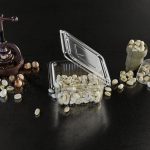
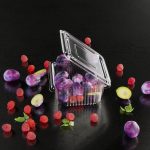
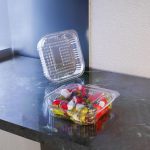
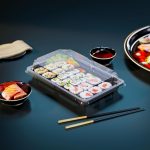
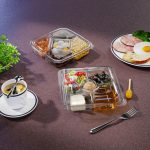
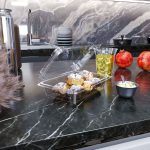
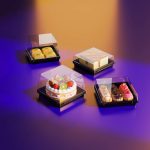

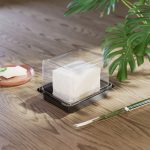



Short answer: choose PP for hot food, soup and the microwave; choose PET for cold food, display and clear presentation. PP withstands heat, while PET is as clear as glass. The decision depends on the product's temperature and the sales channel, not on price.
In this guide, we compare the two materials in a property table. We then list which container suits each type of food and which material each Dipack product family is made from. The last section covers the most common selection mistakes.
What are PP and PET?
PP stands for polypropylene and carries recycling code 5. It is a heat-resistant, flexible and semi-transparent material. That is why manufacturers make food containers that need hot filling and microwave reheating from PP.
PET stands for polyethylene terephthalate and carries recycling code 1. It is rigid, glass-clear and impact-resistant. It is the first choice for cold food, display presentation and beverage cups; however, it loses its shape with hot food.
PP vs PET containers: comparison table
The table below compares the two materials on the points a business actually decides on. Match your product against the table and pick the material at a glance.
| Property | PP container | PET container |
|---|---|---|
| Clarity | Semi-transparent or colored | Glass-clear |
| Hot fill | Suitable | Not suitable |
| Microwave reheating | Suitable (lid open) | Not suitable |
| Refrigerator | Suitable | Suitable |
| Impact resistance | High, flexes | Good, rigid |
| Leak-proof lid | Locking lid available | Locking lid available |
| Recycling code | 5 (PP) | 1 (PET) |
| Typical use | Hot meals, soup, meat, hummus | Meze, salad, desserts, sushi, cups |
We left out a price column on purpose, because the prices of the two raw materials change places from period to period. Choose the material by application, then request a current quote.
Which material for which food?
The safest method is to start from the product's serving temperature. Anything served hot or reheated by the customer goes into PP; anything served cold that needs to be seen goes into PET. The table below maps Dipack's product families using this logic.
| Food | Material | Suitable Dipack product |
|---|---|---|
| Stews, rice, pasta | PP | PP hot food containers |
| Soup, hot meze | PP | Soup bowl, PP leak-proof containers |
| Kebab, doner, grilled meat | PP | Kebab containers |
| Raw meat, chicken, ground meat | PP | Meat trays |
| Olives, pickles, deli products | PP | Deli containers |
| Hummus, yogurt dips (haydari, cacik) | PP | Hummus containers |
| Cold meze, yogurt, milk puddings | PET | Leak-proof containers |
| Salad, fruit | PET | Salad containers |
| Baklava, cake, cookies | PET | Baklava, cake, cookie containers |
| Sushi | PET | Sushi containers |
| Sauces, ketchup, mayonnaise | PET | Sauce containers |
| Cold drinks, bubble tea | PET | PET cups |
| Cheese, curd cheese | PP bowl + PET lid | Cheese containers |
Why PP for hot food?
A hot food container has two jobs: it must not deform during hot filling, and the customer must be able to reheat it in the microwave at home. PP meets both conditions because it does not soften with heat and keeps its shape. PET shrinks during hot filling, so the locking lid no longer seats properly.
PP also flexes, so a container squeezed in a courier bag does not crack. When reheating in the microwave, open the lid or lift one corner so steam can escape and the lid does not bulge. The microwave symbol on the bottom of the container confirms this use.
Why PET for cold food and display?
PET's strength is visibility. Meze, salads and desserts sell on their contents in the display case and on the supermarket shelf, so a glass-clear body has a direct effect on sales. Its rigid structure holds the locking lid tight and keeps its shape in the refrigerator.
PET is also the standard for cold drink cups, because the color and layers of the drink stay visible. Still, do not fill PET containers with hot food or put them in the microwave, because the body loses its shape and the lid comes off.
Microwave, hot fill and refrigerator: practical answers
Three questions come up again and again when choosing a material: can the container go in the microwave, can it be hot filled, and what happens in the refrigerator? The list below gives the short answer for both materials; always check the technical table on the product page as well.
- Microwave: PP containers are suitable; open the lid and check the symbol on the bottom. PET containers are not suitable.
- Hot fill: you can fill PP containers with hot food. With PET containers, add the product after it has cooled.
- Refrigerator: both materials keep their shape in the cold, and the locking lid stays leak-proof.
- Courier transport: PP flexes, so it does not crack when squeezed; PET is rigid, so it does not crush when stacked.
How to tell whether a container is PP or PET
Look at the triangle recycling symbol on the bottom of the container: a 1 inside means PET, a 5 means PP. If there is no symbol, use two simple tests. A PET container is clear like glass and stays rigid when pressed; a PP container looks slightly matte and flexes when pressed.
Also remember that the lid and the container may be made of different materials. For example, cheese containers combine a colored PP bowl with a clear PET lid, so assess the two parts separately.
The 4 most common selection mistakes
The wrong material means customer complaints and wasted product. Check the four points below before you order.
- Putting hot food in a PET container: the container shrinks and the lid leaks. Always choose PP for hot service.
- Putting a display product in a PP container: the semi-transparent body hides the product; use PET for shelf products.
- Leaving the lid closed in the microwave: steam makes the lid bulge; open the lid before reheating.
- Looking only at price: raw material prices change by period; choose by application, then request a quote.
PP and PET container options at Dipack
Dipack, the brand of Onursan Ambalaj, produces both materials on its thermoforming lines at its Dursunbey factory (Balıkesir). On the PP side there are hot food, meat, deli, kebab and hummus containers; on the PET side there are leak-proof, salad, dessert, sushi and sauce containers and cups. Some models are also offered in both materials at the same volume.
For example, the 500 cc (500 ml) leak-proof container is available in both the PET Eco series and the PP series. You can therefore use two separate containers of the same size for cold meze and hot meals. If you need a mold in your own size, see the process on the custom packaging page.
If you are not sure which material fits, request a sample. Tell us about your product and how you serve it; our team will send a quote with a PP or PET recommendation.
Request a quote on WhatsApp Contact formPP and PET containers: frequently asked questions
Is PP or PET better?
Each is better for a different job. Choose PP for hot food and the microwave, and PET for cold food and clear display presentation.
Can PP containers go in the microwave?
Yes, PP containers are suitable for microwave reheating. Still, leave the lid open and check the microwave symbol on the bottom of the container.
Can PET containers be used for hot food?
No. PET deforms during hot filling and the locking lid does not seat properly. Use PP containers for hot food.
Can PET and PP containers go in the refrigerator?
Yes, both materials keep their shape in the refrigerator. In the cold chain, PP is common for meat and deli products, and PET for meze and desserts.
What are the recycling codes of PP and PET?
PET has code 1 and PP has code 5. You will find the code inside the triangle symbol on the bottom of the container.
Are PP containers transparent?
PP is semi-transparent; the contents are visible, but not as clearly as with PET. That is why businesses prefer PET for display products.
Are the same sizes available in both PP and PET?
Yes. For example, Dipack produces 250, 375, 500, 750 and 1000 cc leak-proof containers in both the PET Eco series and the PP series; see the product pages for dimensions.