

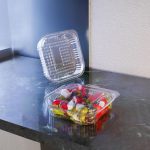
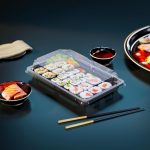
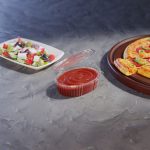

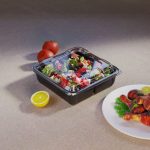

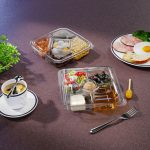





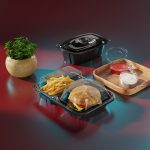


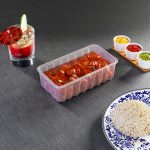

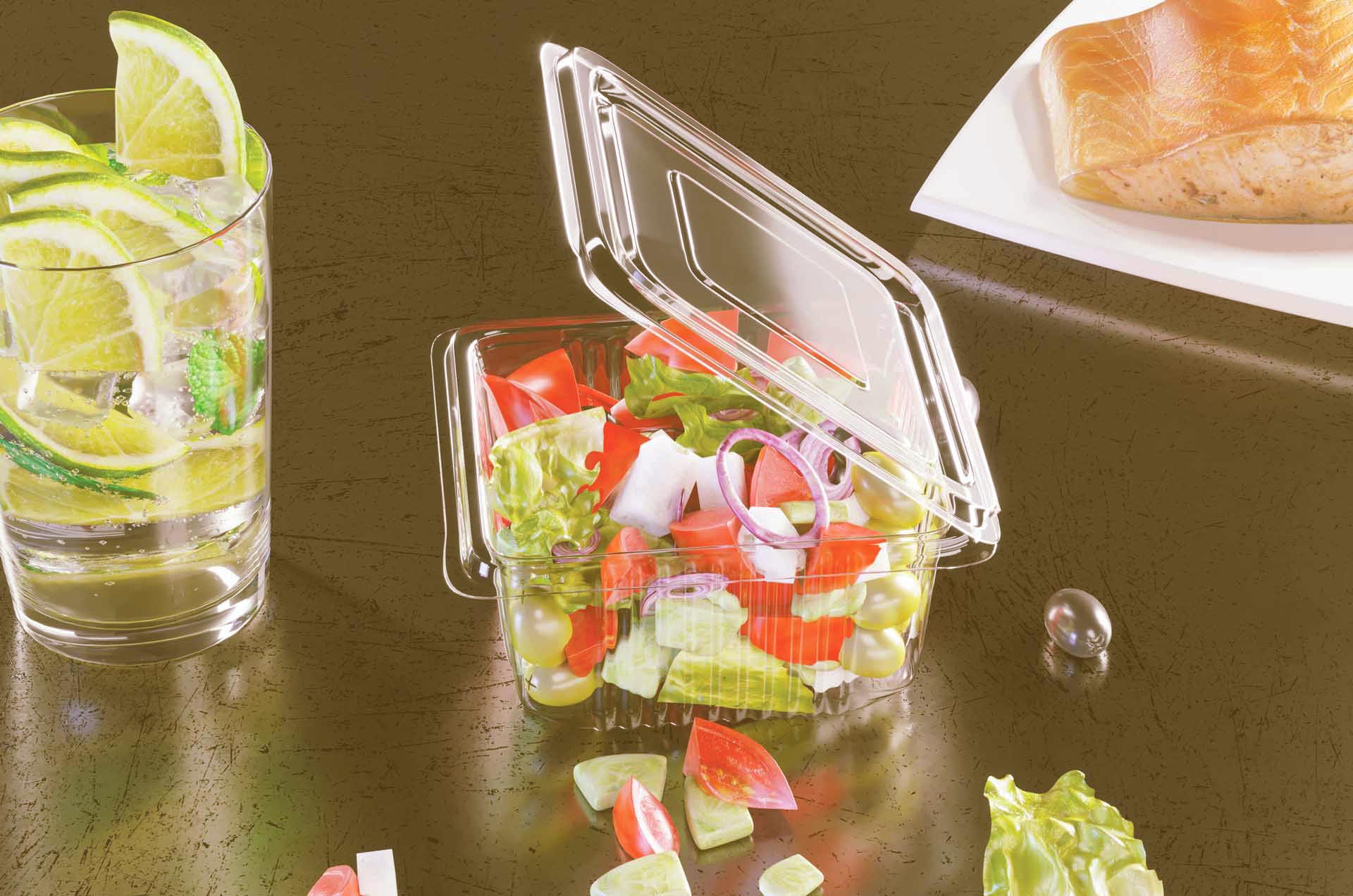
Short answer: you tell if a plastic food container is high quality by testing a sample with your own product. The wall should be even everywhere, the lid should lock at all four corners and the container should not crush when stacked. The body should also have no odor, and the manufacturer should supply a written declaration of compliance for food contact.
We wrote this guide for restaurants, bakeries, delis and food producers that buy containers in bulk. First, you get an eight-point checklist. Then we show how to run each check at your sampling table and how to verify the first delivered batch.
How do you tell if a plastic container is high quality?
A high quality container is one that passes all eight simple checks. You do not need a lab for them, because a table, a jug of water and your real product are enough.
| Check | How to look | Sign of a good container | Sign of a weak container |
|---|---|---|---|
| Wall consistency | Hold it up to the light, press the corners and base | Same color and gloss everywhere | Whitening at corners, a paper-thin base |
| Lid lock | Press the lid closed at all four corners | A clear snap at every corner | One corner closes while the opposite one pops open |
| Leak resistance | Fill with water and turn it upside down | No drops at the rim | Leaking from the lid channel |
| Clarity and surface | Place it on a white surface | Clear body, clean surface | Cloudy patches, flow marks |
| Trim edge | Run a finger along the rim | Smooth, even edge | Burrs, jagged cut |
| Stacking strength | Put two full containers on top of a full one | Body and lid keep their shape | Lid caves in, body bulges |
| Denesting | Pull containers one by one from an empty stack | Containers separate without sticking | Two containers stick together |
| Odor and documents | Smell the opened bag, ask for the declaration | No odor, written declaration of compliance | Strong odor, verbal assurance only |
Each row prevents a separate cost. For example, a weak lid lock means returns, and weak stacking strength means crushed food in the delivery bag.
Why do wall thickness and consistency matter?
The wall is the side of the container, and its thinnest point sets the strength of the whole container. In thermoforming, the sheet stretches as it enters the mold, so it gets thinnest at the corners and the base.
That is why good production balances this thinning through sheet selection and heating. As a result, both the corners and the base carry the load. We explain the production steps in our guide to thermoforming.
How do you check the wall on a sample?
- Light test: hold the container up to a window; thin areas look lighter and glossier.
- Press test: press a corner and the base with your thumb; a good container flexes and springs back.
- Whitening check: a white line or crack at a corner means the sheet stretched too much there.
- Caliper reading: for regular orders, measure the same spot on every batch and record it.
However, a thicker container is not always a better one. For example, a well-designed rib and corner structure gives the same strength with a thinner wall.
How do you test the lid lock and leak resistance?
You test the lid lock by turning a water-filled container upside down. The lid sits in the channel on the container rim and grips it all the way around, so one weak corner breaks the whole seal.
- Fill the container with water to about 1 cm (0.4 in) below the rim.
- Then press the lid closed at all four corners.
- Next, hold the container upside down for 10 seconds and lay it on its side.
- Finally, open and close the lid several times; the lock should not loosen.
Also try lids and bodies from different batches, because the mold fit should stay the same across production. You can find the sizes and lid options of the leak-proof ranges on our leak-proof containers page.
What do clarity, surface and trim edge tell you?
A clear body and a clean cut show that the raw material and the mold are well maintained. In display products, the customer sees the food through the container, so a cloudy body makes the food look dull too.
On the other hand, the material sets the clarity you can expect. PET gives a glass-clear body, while PP is translucent. So a slightly matte PP container is not a defect; we compare both materials in our PP vs PET guide.
Similarly, the trim edge is a quality signal. A burred edge can cut a hand, does not seat in the lid channel and weakens the lid lock. That is why you should always run a finger along the rim.
How do you check stacking and carton strength?
You check stacking strength by placing full containers on top of each other. In the delivery bag, on the fridge shelf and in storage, containers carry weight, so the body and lid must keep their shape under that load.
With empty containers, another check matters: denesting. On a filling line, staff pull containers from the stack quickly, and containers that stick together slow the line down. So pull 20 to 30 containers in a row from a sample bag.
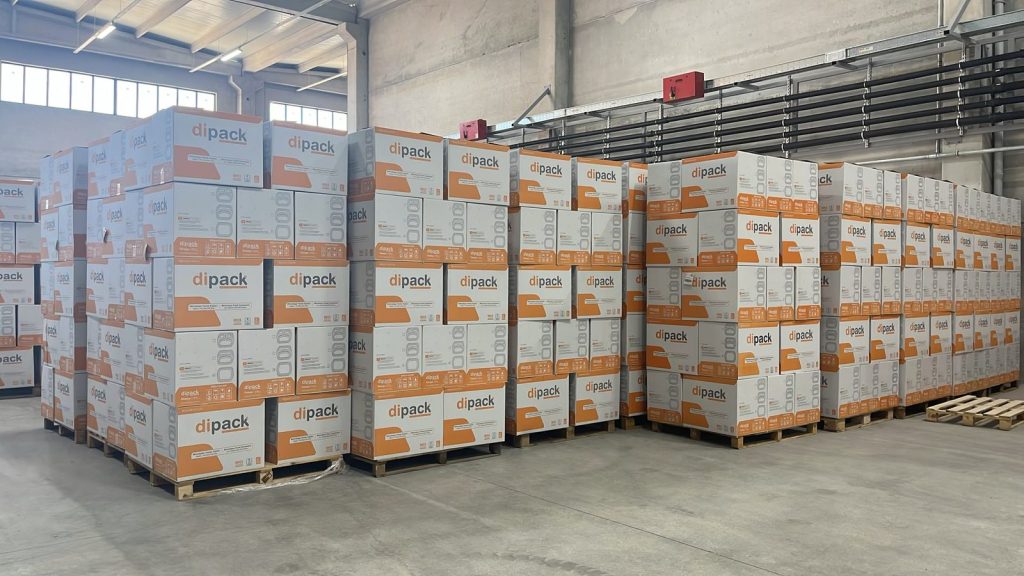
The carton is part of the product as well. It should arrive uncrushed, and the count per bag should match the label. For example, Dipack product pages show the count per bag, the carton dimensions and the container load; for load planning, see our carton and container calculation guide.
How do you check odor and food-contact documents?
You check odor the moment you open the bag. A good container has no noticeable odor and does not change the smell or taste of food. To confirm this, leave your product in the container overnight and taste it.
In contrast, the document check must be in writing. Ask the manufacturer for the declaration of compliance for food contact; it states the material, the conditions of use and the temperature limit. We list the documents to request in our food-grade plastic guide.
However, the number on the bottom of the container shows the material, not the quality. For example, 1 means PET and 5 means PP; see our plastic recycling codes article for details.
How do you test containers for hot and cold use?
Test the container at the temperature your product will actually see. A container that looks perfect at room temperature can behave differently with hot fill or in the fridge.
- Hot fill (PP): fill the container with food at serving temperature and close it. Once it cools, look for a caved-in body or a loose lid.
- Microwave (PP): if customers reheat food at home, heat the container with the lid slightly open. This way you see whether the body keeps its shape.
- Cold chain (PET and PP): keep the container in the fridge overnight, then open and close the lid. The lock should snap just as clearly in the cold.
- Freezer: for frozen products, gently flex the frozen container; a good container flexes without cracking.
Do not hot-fill a PET container, because PET is not designed for hot food. For hot service, ask for samples of our PP hot food containers instead.
Which technical details should you get in writing for bulk orders?
Written technical details are the yardstick for comparing the sample with later batches. So ask for the following in a single list at the quote stage.
- Volume (cc), base dimensions and height (mm)
- Material (PET or PP) and suitable temperature of use
- Lid type and the bodies it fits
- Count per bag, count per carton and carton dimensions
- Declaration of compliance for food contact and the sample or product code
For example, a shared base size simplifies stock. In the Dipack Eco and Lux ranges, the 250 cc and 375 cc containers share the same 125×107 mm base, so one shelf layout fits both volumes.
How do you plan sample and first-batch checks?
The sample proves the design, and the first batch proves consistent production. That is why you should run the two checks separately and keep the results in writing.
- Sample stage: run the eight checks in the table with your wettest and heaviest product.
- Use trial: keep the container in the delivery bag or on the shelf for your real delivery time.
- Approval record: keep a few units of the approved sample to compare with later batches.
- First batch: pull containers at random from different cartons and compare size, lid lock and count with the sample.
Sample batch inspection form
For regular orders, check every batch with the same form. This way you catch small deviations before they grow into problems.
| Check | How many? | Acceptance criterion |
|---|---|---|
| Size (base, height) | 5 containers from 3 different cartons | Same as the approved sample |
| Lid lock | 10 containers and 10 lids | Every corner locks |
| Upside-down test | 5 containers | No drops |
| Count per bag | 2 bags | Matches the label |
| Appearance and odor | 1 opened bag | Clear body, no odor |
You will also find trial steps to run with your own menu before a bulk order in our guide to choosing takeaway containers.
Is there a quality difference between the Eco and Lux ranges?
Dipack makes both ranges in the same sizes with the same locking lid design; the difference is the presentation segment. The Eco range is the economical choice for everyday takeaway, while the Lux range targets display cases and retail shelves.
So choose the range by sales channel. The Eco range is enough for delivery, and the Lux range stands out for branded retail products. The comparison table of both ranges is on the Lux leak-proof containers page.
Test the container with your own product before you order. Tell us the volume and lid type you need; our team will send samples and carton details.
Request a quote on WhatsApp Contact formWhy does buying from the manufacturer make quality control easier?
A manufacturer fixes a problem found in the sample at the mold and production line level. A trading company often just swaps the product, so the same problem comes back in the next batch.
Dipack produces its containers from PET and PP at its factory in Dursunbey Organized Industrial Zone, Balıkesir, Türkiye. It designs its molds in its own tool shop, and the facility is BRCGS certified. If you need a shape outside the standard sizes, see our custom packaging page.
Frequently asked questions about plastic container quality
How can you tell if plastic is good quality?
Held up to the light, the color and gloss should look the same everywhere. When you press a corner, the container should flex and spring back; the lid should also lock at all four corners, and the container should have no odor.
What should you look for when buying plastic food containers?
First, make sure the material fits your product temperature: PP for hot food, PET for cold products. Then check the lid lock, the stacking strength and the manufacturer's declaration of compliance for food contact.
Is a thicker container better quality?
Not always. The thinnest point and the design set the strength; a good rib structure gives enough strength with a thinner wall.
Does the number on the bottom show quality?
No, the number only shows the material. For example, 1 means PET and 5 means PP; quality shows in sample checks and the declaration of compliance.
What if the delivered batch differs from the sample?
Put the approved sample you kept next to containers pulled from the batch. Send the difference to the manufacturer with photos and measurements; the manufacturer then adjusts the mold and line settings.
Is a container that is not clear low quality?
No. PP is naturally translucent and suits hot food. Glass-like clarity is only expected from PET containers.
Does Dipack send samples?
Yes, we send samples for the volume and lid type you choose. That way you test the container with your own product before you place a bulk order.